UNIFINplatform

Solution

Unifin Report

Reporting is not an archive, it is a service with customers.
The product assembles reports and dashboards from governed data and distributes them on schedule.
New reports are configured in the interface, and supervisory answers go out the same day.

  • Starting solution
  • Business self-service
  • Access by role
All solutions

Live screens from the product terminals

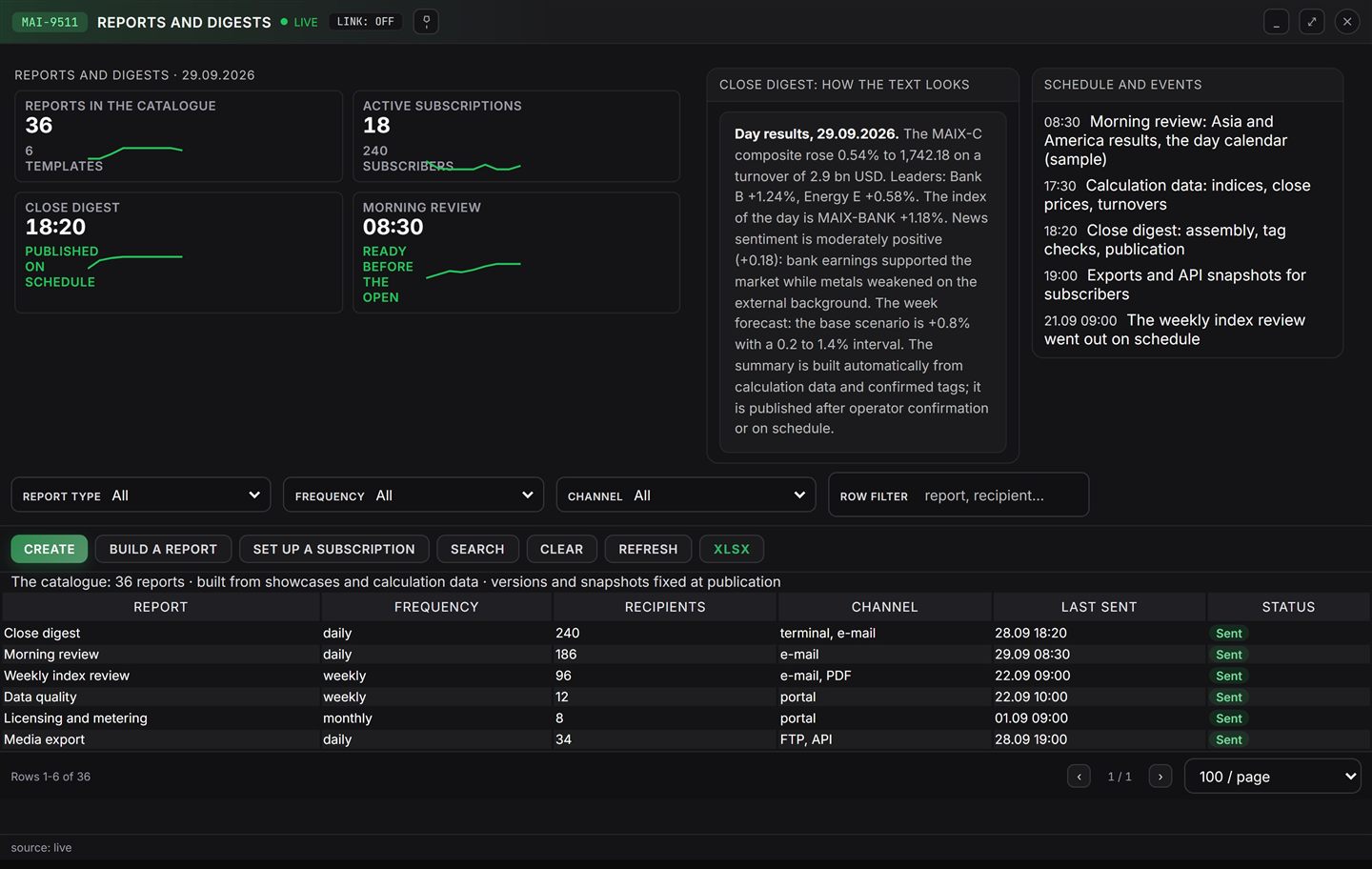
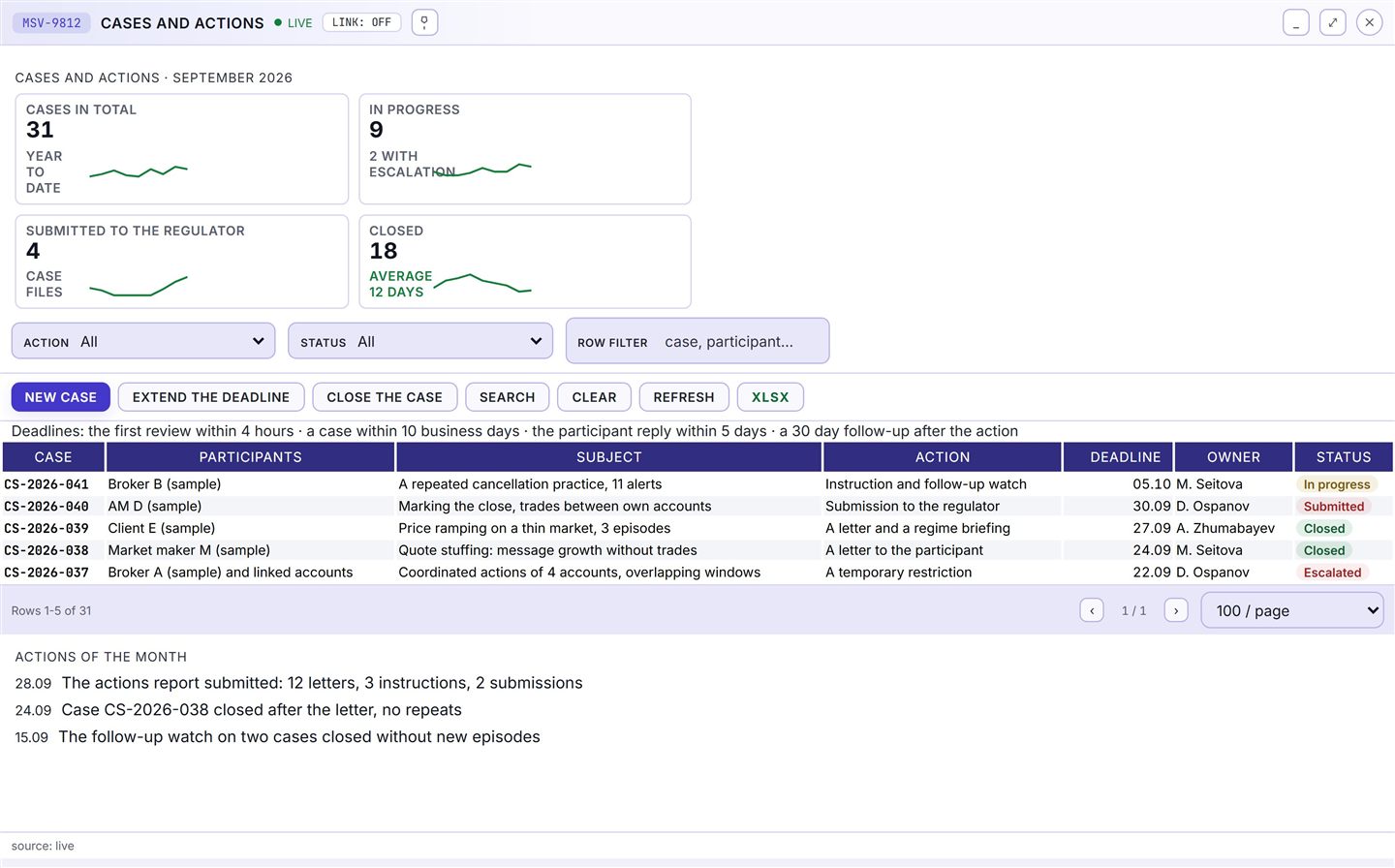
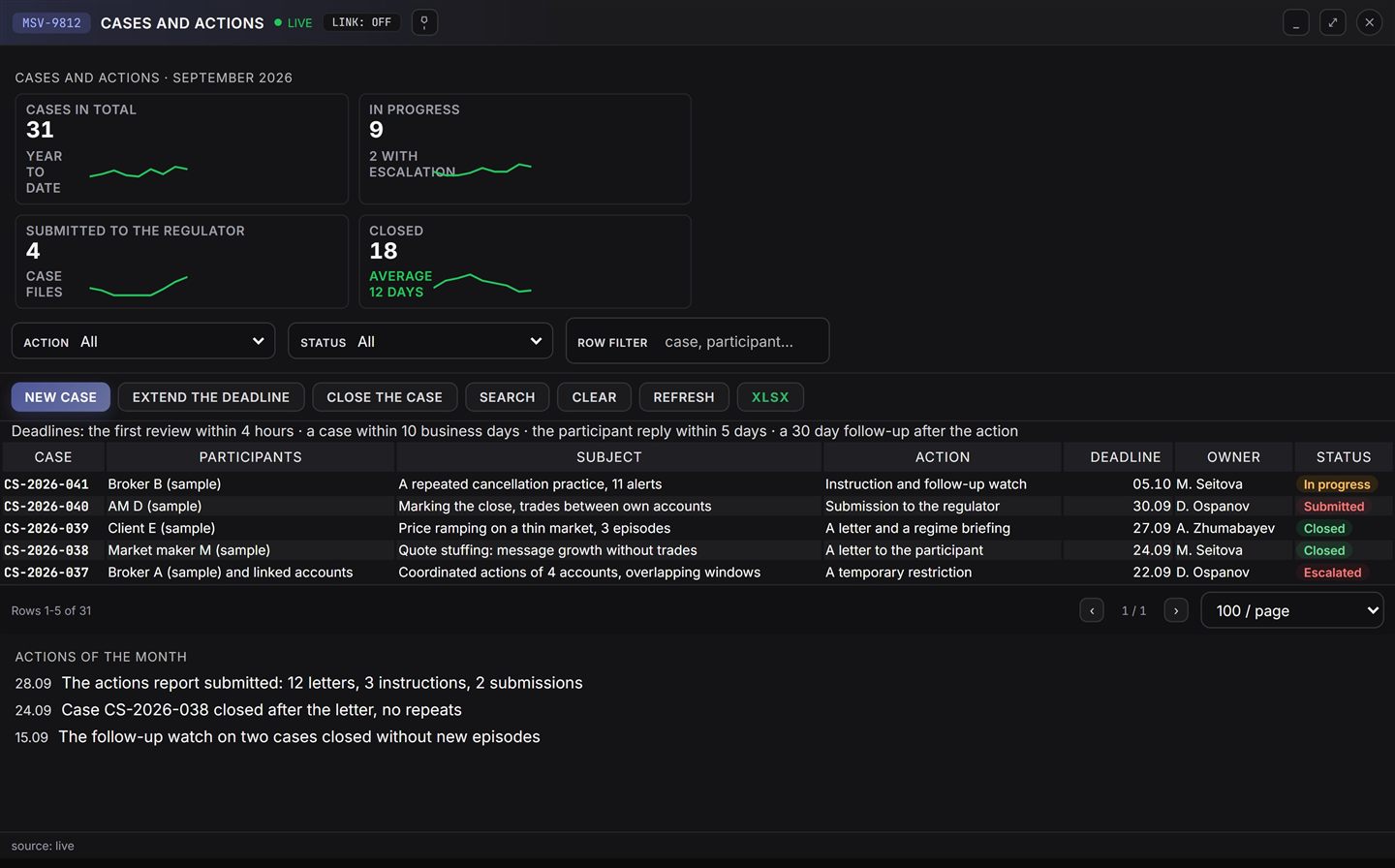
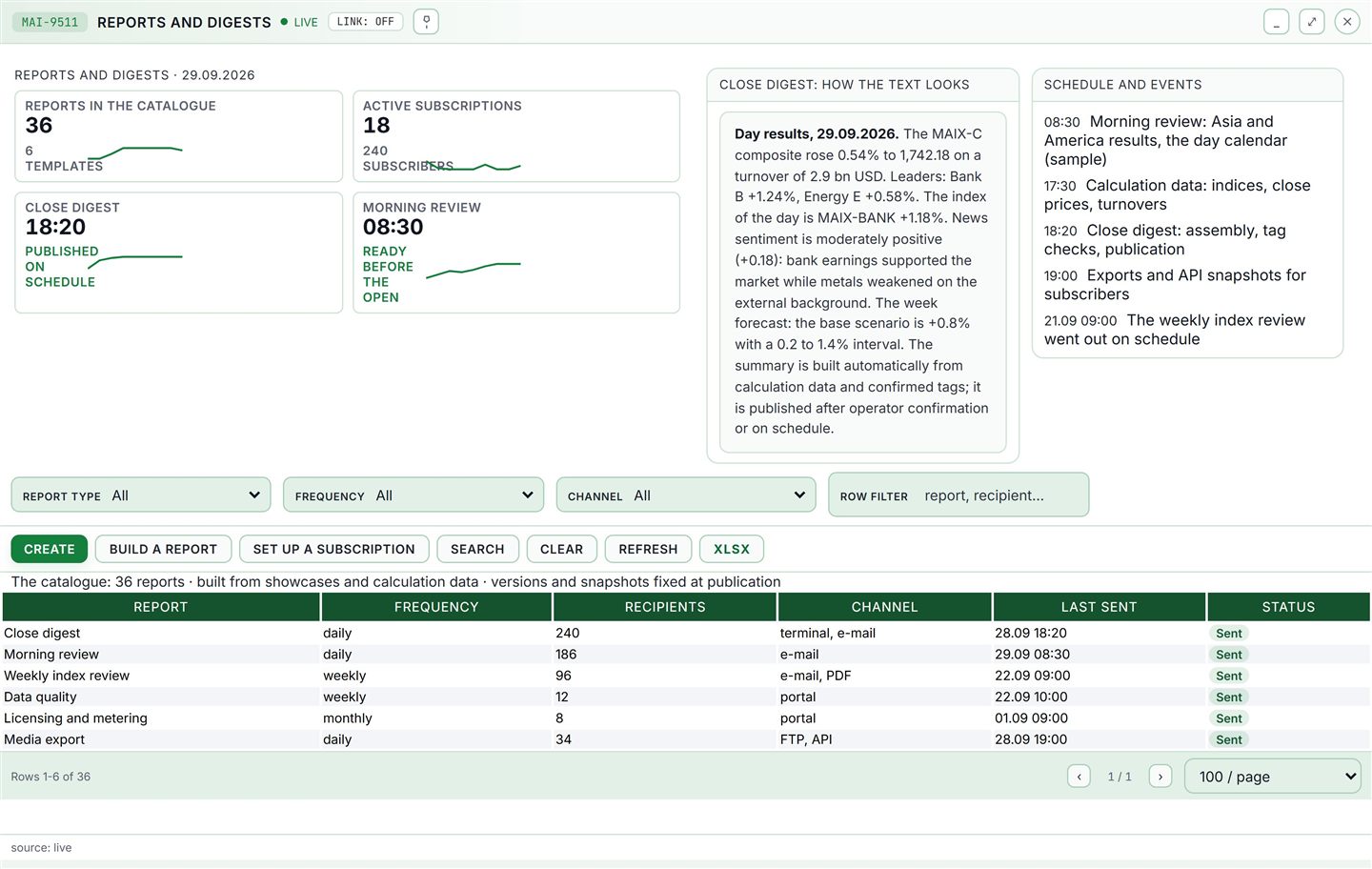
Report catalogue with schedules and channels Report catalogue with schedules and channels Management dashboard with KPI tiles Management dashboard with KPI tiles Report desk with submissions and receipts
Demo Unifin Report
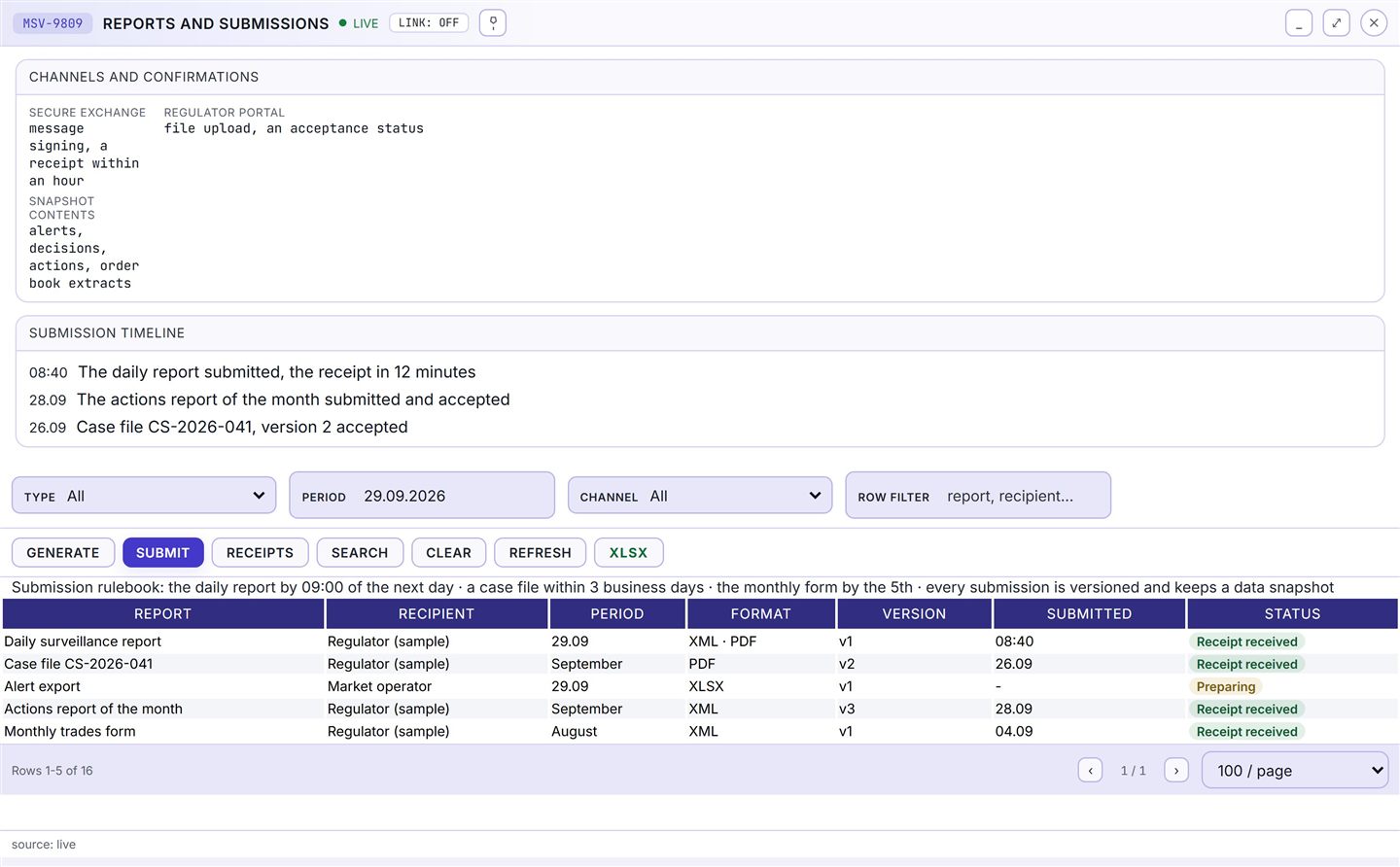
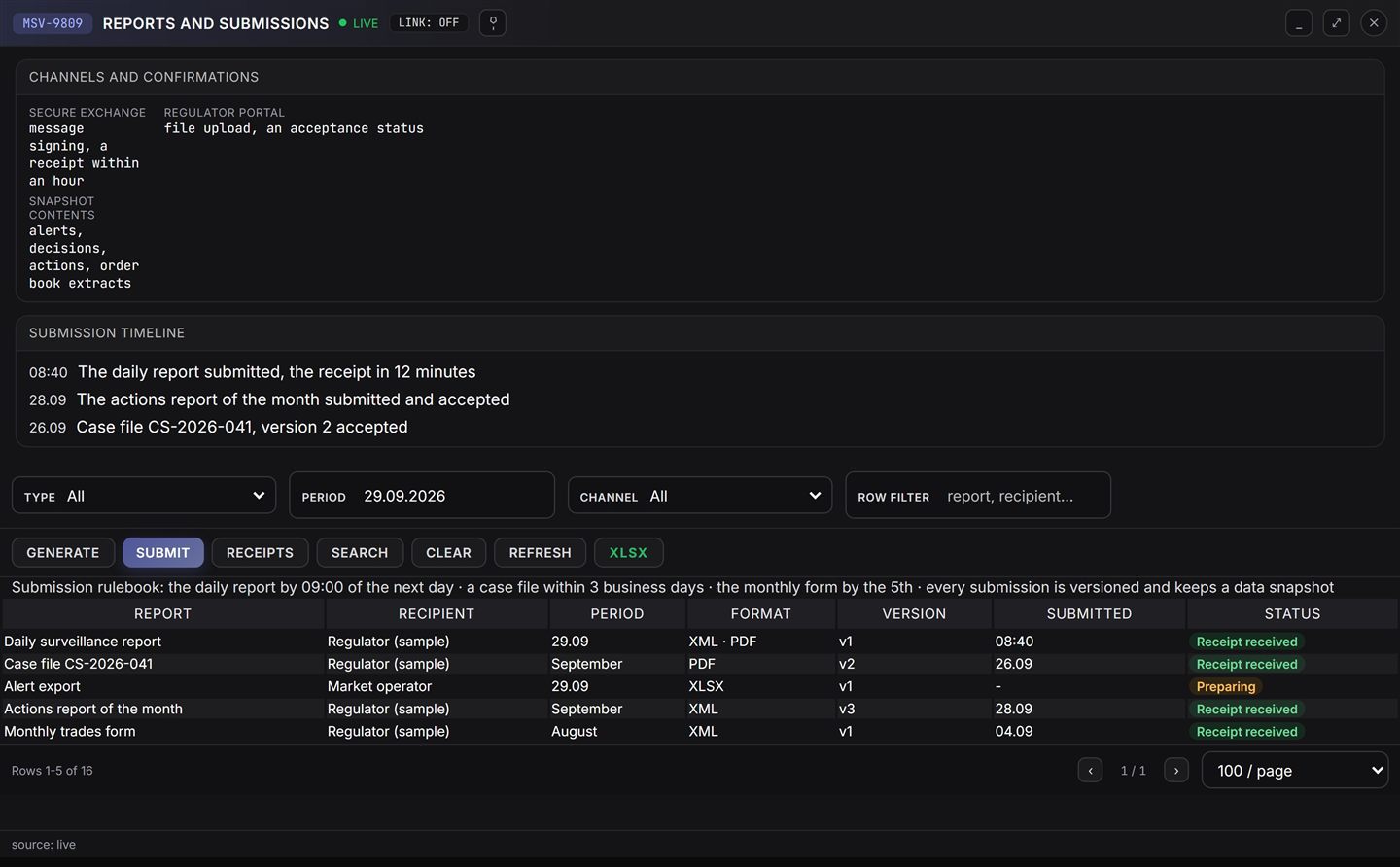
Reports and submissions
Reports and submissions: statuses, deadlines and receipts
Reports and submissions
Reports and submissions: statuses, deadlines and receipts

This is an interface demonstration: the real solution will differ in colours and content for a specific project.

Functions at a glance

Business functions at a glance

From the report catalogue to control and archive.

Report catalogue
Runs the registry with owners and terms
Every report has an owner and a term
Template studio
Builds templates with parameters and versions
A new report is configuration, not a request
Scheduling
Starts reports by calendar and events
Issuing does not depend on manual runs
Distribution
Delivers reports with retries and receipts
Recipients get their own formats
Access by role
Limits visibility down to the row
Each party sees only what it should
Dashboards
Builds live panels from the same layer
Management sees the picture without exports
Control and archive
Keeps runs, versions and delivery proofs
An inspection finds the report in minutes

What runs today

Report as a service, already running

Report as a service: the live parts.

Catalogue

The report catalogue is the single registry.

Studio

The template studio builds new reports.

Schedule

Scheduling and distribution run on time.

Dashboards

Dashboards and self-service serve the business.

Audit

Access and archives keep the trail.

Roadmap

More regulator forms come next.

Solution description

Capabilities and overview

Key features

  • Report catalogue with owners and deadlines
  • Template studio: parameters and versions
  • Scheduling: launch by calendar and events
  • Distribution with retries and delivery receipts
  • Access by role down to the row level
  • Dashboards from the same governed data layer
  • Business self-service without a programmer
  • Core integrations: extracts and reconciliations from sources
  • Control and archive of runs with evidence
  • Access management for data and reports
  • Journal of runs, versions and deliveries
  • Deployment: by configuration, within the UniFin platform

Product overview

Unifin Report is the UniFin platform reporting suite for market organisations that need reports and dashboards as a service.

The suite assembles reports and dashboards from governed data, launches them on schedule and distributes them with receipts.

A new report is configured in the interface, while access is limited by role down to the rows.

Every run, version and delivery stays in the archive: a report can be explained and proven.

The solution runs within the UniFin platform and connects sources through integrations.

What it delivers

What the solution delivers

Report catalogue

Reports usually live as a list in e-mail, and the owner surfaces only at inspection time. The solution runs a catalogue with the owner, frequency, formats and recipients. With the solution it is visible who is responsible for every report and when it comes out. In setup the regulation behind every report is visible, and the registry runs as reference data.

Template studio

Templates are usually assembled in spreadsheets, and versions scatter across working folders. The solution builds templates from governed data with parameters and version review. With the solution a new report issues as configuration, without ordering development. In setup the versions and the review history are visible, and the datasets come as reference data.

Scheduling

Runs are usually started by hand, and the issue depends on who is at their desk. The solution starts reports by calendar, event or request. With the solution the issue arrives on time, without manual reminders. In setup the windows, dependencies and reruns are visible, and the schedules are set in configuration.

Distribution

Delivery usually runs over correspondence, and proofs are not kept. The solution delivers reports by e-mail, SFTP, portal and object storage with retries. With the solution it is visible who received the report and when. In setup receipts for every recipient are visible, and the data masking comes as reference data.

Access by role

Access is usually configured by hand, and extra rows leave the building with the report. The solution limits visibility by role down to the row. With the solution reports are shared without excess disclosure. In setup the access rules and change approvals are visible, and the scopes are configured per segment.

Dashboards

Panels are usually assembled from exports, and the numbers are stale by morning. The solution builds live dashboards from the same certified data layer. With the solution metrics, deadlines and statuses are visible without exports. In setup the sources and the composition of panels are visible, and the layouts come from the setup.

Control and archive

An inspection usually means pulling the archive and rebuilding who received what. The solution keeps the run history, template versions and delivery proofs. With the solution supervisory requests are answered from the journal. In setup the data snapshot of every issue is visible, and the retention terms are part of the configuration.

Coverage

What it covers

Closes the reporting cycle and keeps the audit trail visible.

Report catalogue

One registry: owner, frequency, formats, recipients and the regulation behind each report.

Template studio

Templates with parameters and versions; changes pass review before they reach readers.

Scheduling

Calendars, windows and dependencies; reruns and corrections with a full history.

Distribution

Channels, retries, subscriptions and receipts; personal data masked where the role requires it.

Dashboards

Live panels for management: KPIs, deadlines and statuses from the same data.

Self-service

Business users assemble their own views from governed datasets without writing queries.

Access management

Roles, scopes and row-level rules; access changes carry four-eyes approval and a record.

Audit and archives

Archive of every issued report with the version, recipients and delivery proofs.

Stand

Screens of the solution

The report desk, the catalogue and the management dashboard.

Report desk with submissions and receipts
Reports and submissions: statuses, deadlines and receipts
Report catalogue with schedules and channels
Report catalogue: frequencies, recipients and delivery channels
Management dashboard with KPI tiles
Management dashboard: KPI, deadlines and statuses at a glance

How it works

From a request to a delivered report in five steps

The path of a report: order, assembly, review, delivery and proof.

  1. 1

    The report is ordered

    The requester defines the report; the catalogue records owner and frequency.

  2. 2

    The template is assembled

    Templates come from governed datasets and certified metrics; versions pass review.

  3. 3

    The run happens

    Schedule fires or a user asks; each run stores the snapshot.

  4. 4

    Delivery follows the rules

    Recipients get the format their role allows; receipts close the loop.

  5. 5

    Evidence stays

    The archive stores what was issued, to whom, on what basis.

Industries

Industries it serves

The suite serves exchanges and depositories, banks and brokers, corporates and issuers, fintechs and the supervisor. Everyone who has to report and be seen reporting.

Exchange / venue

Trading, supervision, market data and post-trade on one governed core, launched by configuration.

Bank / payments

Settlement, payments and custody services for the market around the trading core.

Corporate / issuer

Market access for producers and issuers: auctions, deliveries, tokenised assets and data.

Fintech / data

Data products, AI services and API-first access to build on the platform.

Regulator / supervisor

Surveillance evidence, market analytics and reporting built from live transaction data.

Architecture

Architecture and access

The reporting suite stands on the platform core and reads from it. No separate data copy to maintain, no reporting project to start.

Ready base from day one

The factory, schedules and channels arrive configured; you connect data domains and start issuing.

Customisation as configuration

Report sets, delivery channels and access rules are settings tailored to your market and your regulators.

Single sign-on and audit

Identity, roles and the audit journal work as platform services; every view and export is recorded.

Source code as an option

Code handover is optional for production; the service runs under an SLA or by your team.

AI layer

The AI layer answers questions over reports and explains changes in the numbers; people approve every step.

Architecture scheme The same architecture as a standalone page. Open the diagram separately

Readiness

Ready today, next in line

Pilot-ready on your report set; the library adapts per regulator.

Ready today

  • Report catalogue, template studio and run history
  • Scheduling with windows, dependencies and reruns
  • Distribution by e-mail, SFTP and portal with receipts
  • Roles, scopes and row-level access rules

Next in line

  • Regulator report packs for the local market
  • Natural-language report requests for business teams
  • Automated reconciliation of submitted and published reports

Releases

Release history

Quarterly releases from the foundation of the platform (2020); the reporting suite ships as a packaged product from 2026.

2026 Q1

  • Report catalogue, template versions and the run history.

2026 Q2

  • Scheduling, distribution channels and delivery receipts.

2026 Q3

  • Dashboards, self-service views and row-level access rules.

Detailed description

Detailed description

The factory scheme, the role model and the delivery frame.

How the suite is assembled

Channels and clients
FIX 4.2 / 4.4 / 5.0, REST with mTLS, SFTP files, web portals
Edge and access
API gateway with 126 routes, Keycloak single sign-on, WAF and CSP
Platform core services
reporting-ms template studio notification-ms docflow-ms AI agentic layer Services of the suite on the shared platform core
Data and events
PostgreSQL 17 per service, Redis 7, RabbitMQ 3.13 quorum queues, transactional outbox
Results and reporting
Portals, reports, regulator and partner channels

Technology stack

Runtime and backend: Java 21 (LTS), Spring Boot 3.5.16, Spring Cloud 2025.0.3, Gradle, Flyway 10.15.

Data: PostgreSQL 17 per service, Redis 7 with Sentinel, RabbitMQ 3.13 quorum queues, transactional outbox and DLQ replay.

Portals: Next.js 16.3.3, React 19, TypeScript 5; OpenTelemetry 1.31 to Jaeger.

Delivery: Kubernetes and Helm, Vault secrets, Prometheus and Grafana, Docker Compose for pilots.

Visualisation: Apache Superset 4 and ECharts 5 for dashboards and charts, Grafana for operations panels, Mermaid for documentation schemes and the portal diagrams.

Factory scheme

  • The pipeline is fixed: catalogue, template studio, scheduling, distribution, archive. Every stage leaves a record.
  • Sources speak through platform contracts: the factory never becomes a second register of record.
  • Output formats: PDF, XLSX, CSV and portal views from one template version.
  • Every recipient gets a receipt: delivered, opened, retried or failed.

Role model

  • Business users assemble their own views from governed datasets, without writing queries.
  • Row-level scopes: an issuer sees its own data, a participant its positions, the supervisor the market picture.
  • Template publication and access changes pass four-eyes approval.
  • Personal data is masked by role; every view and export lands in the journal.

Delivery frame

  • The pilot runs one report set end to end, from the catalogue entry to the delivery receipt.
  • Regulator report packs for the local market arrive in the next wave.
  • Source code handover as an option with a separate fee, with the role model and delivery schemes documented.

Architecture

  • Built from the platform core: reporting-ms, the template studio, notification-ms and docflow-ms.
  • The suite works through platform contracts: one register of record, no shadow copies of the data.
  • Scaling adds nodes, not rewrites: stateful services grow with Patroni, RabbitMQ and Redis clusters.

Integrations and access

  • OpenAPI for every service: 978 documented endpoints behind 126 gateway routes, plus webhooks and SFTP where partners need files.
  • Single sign-on: Keycloak 26.1, OIDC and JWT, roles, MFA and API keys with quotas.
  • Evidence by default: the audit journal, idempotency keys on writes and a record for every disclosure.
Detailed description

Leave your contacts to open the detailed description and download the PDF with architecture, cases and delivery details.

Put your reporting on one factory

Bring one report set. We will run it through the factory, from the catalogue entry to the delivery receipt, on the pilot stand.