From the model to the running system, brick by brick.
Solution model
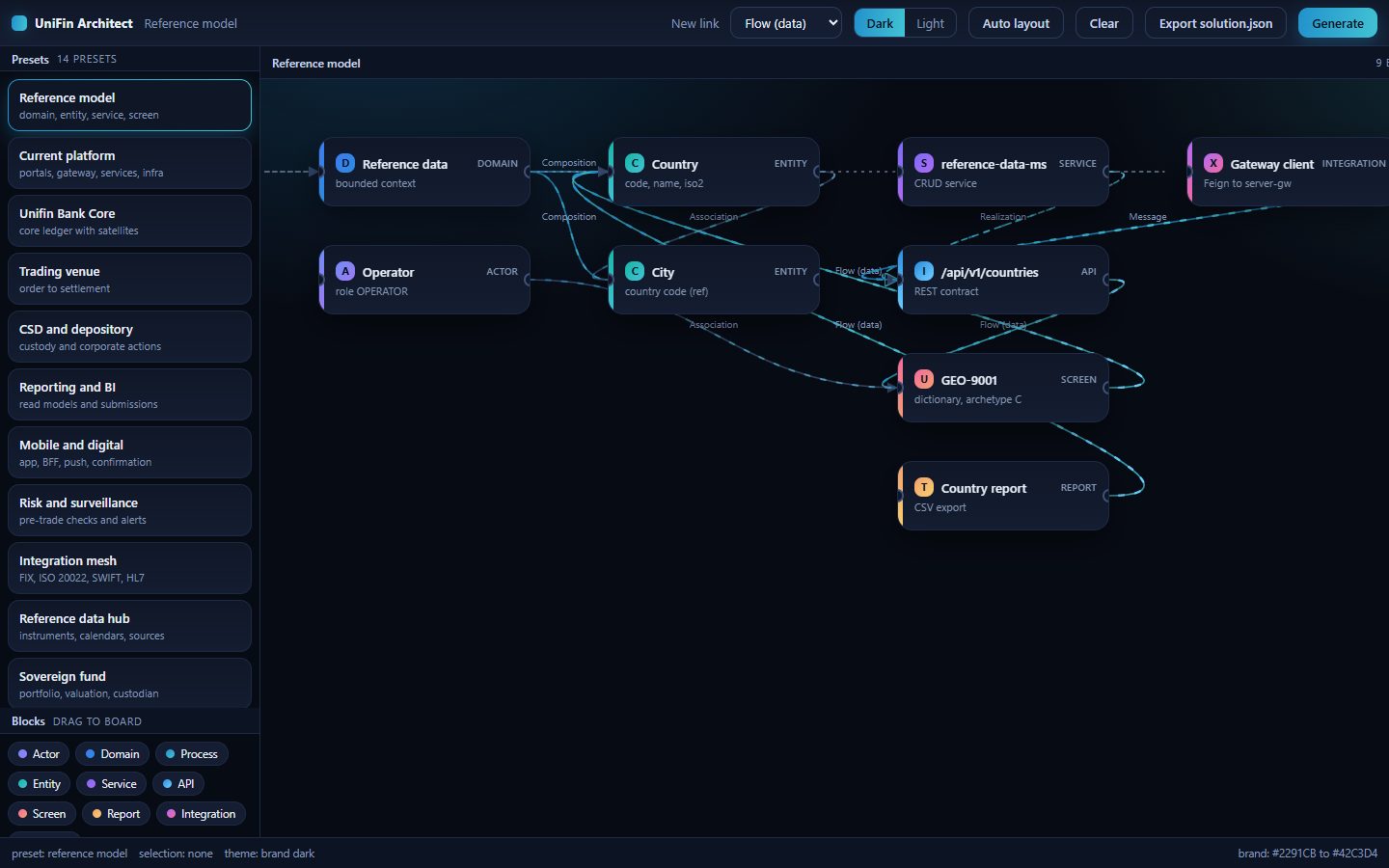
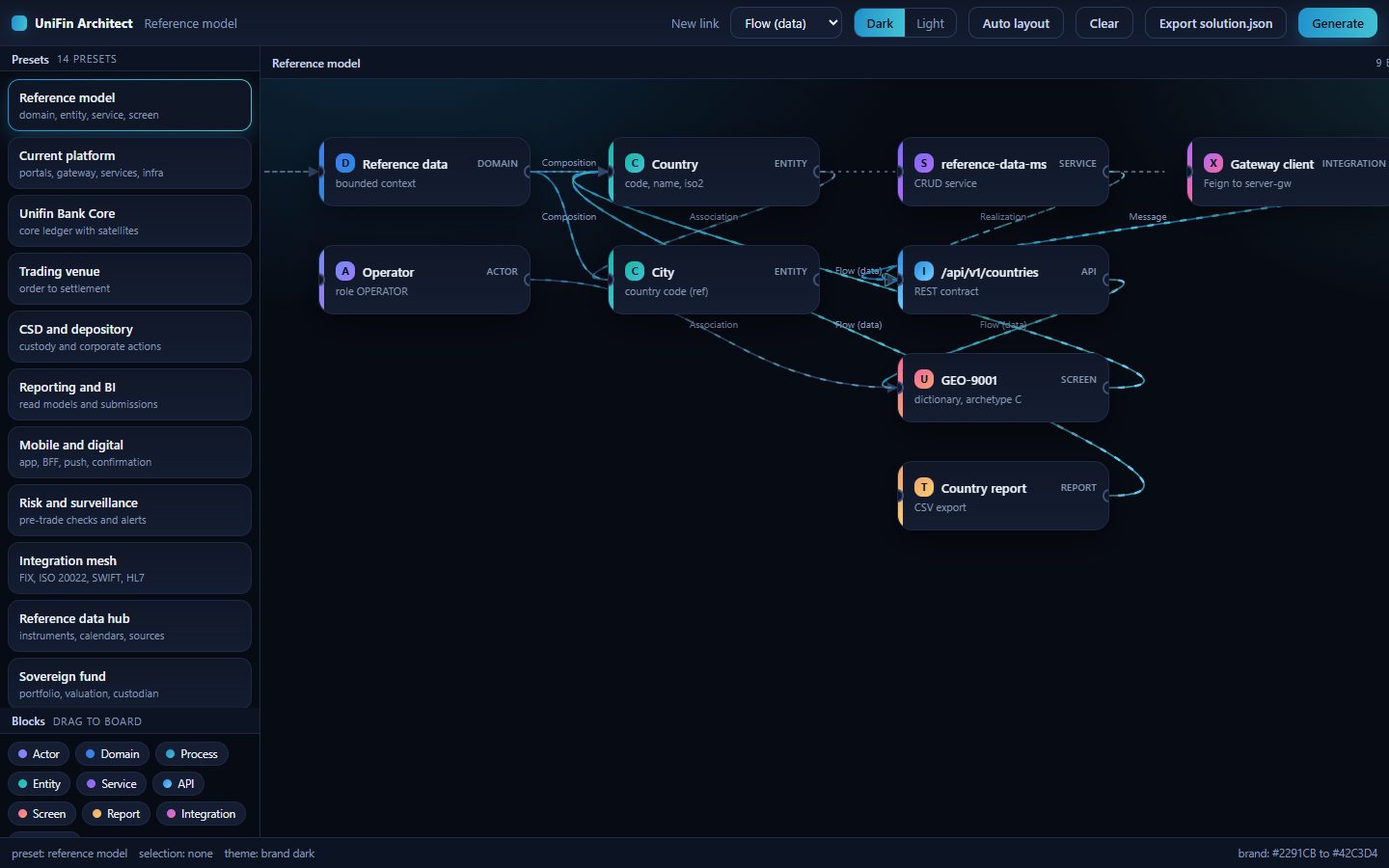
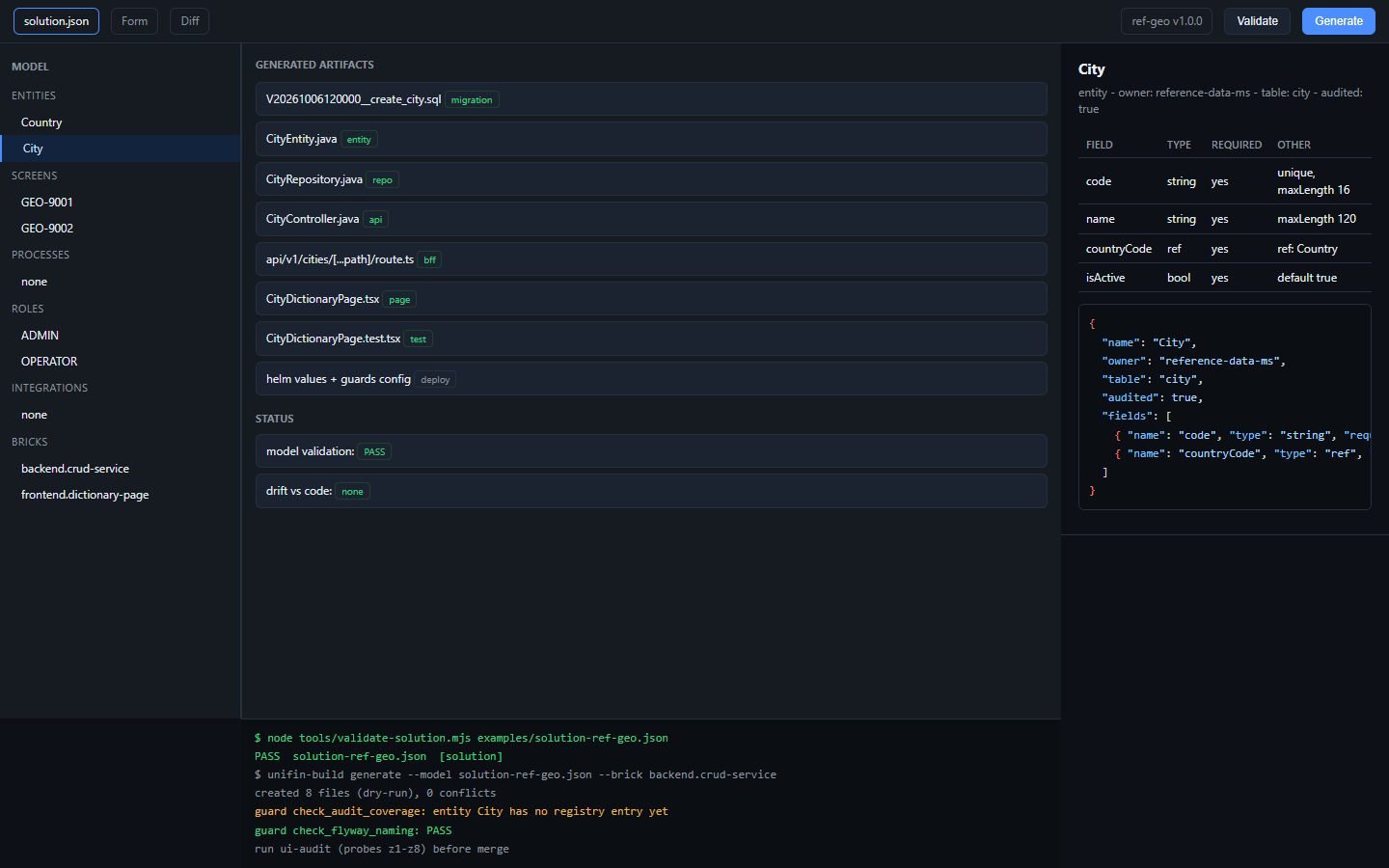
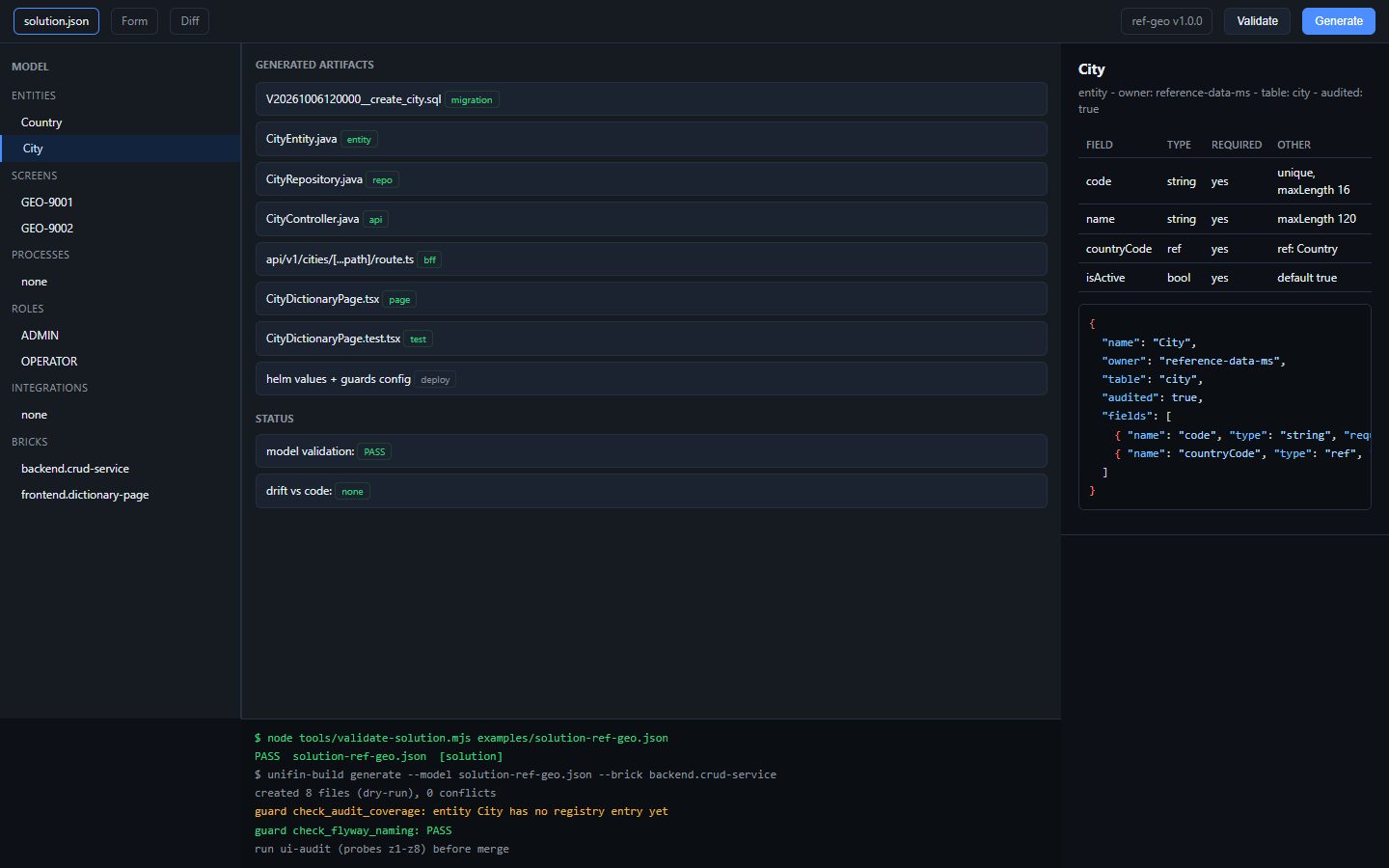
Systems are usually described in scattered documents that drift from the code. The builder keeps entities, fields, screens and processes as one model with versioning. With the solution the model is the source of truth, and the system matches it. In setup the model is visible, reviewable and versioned, and the history comes with it.
Brick catalog
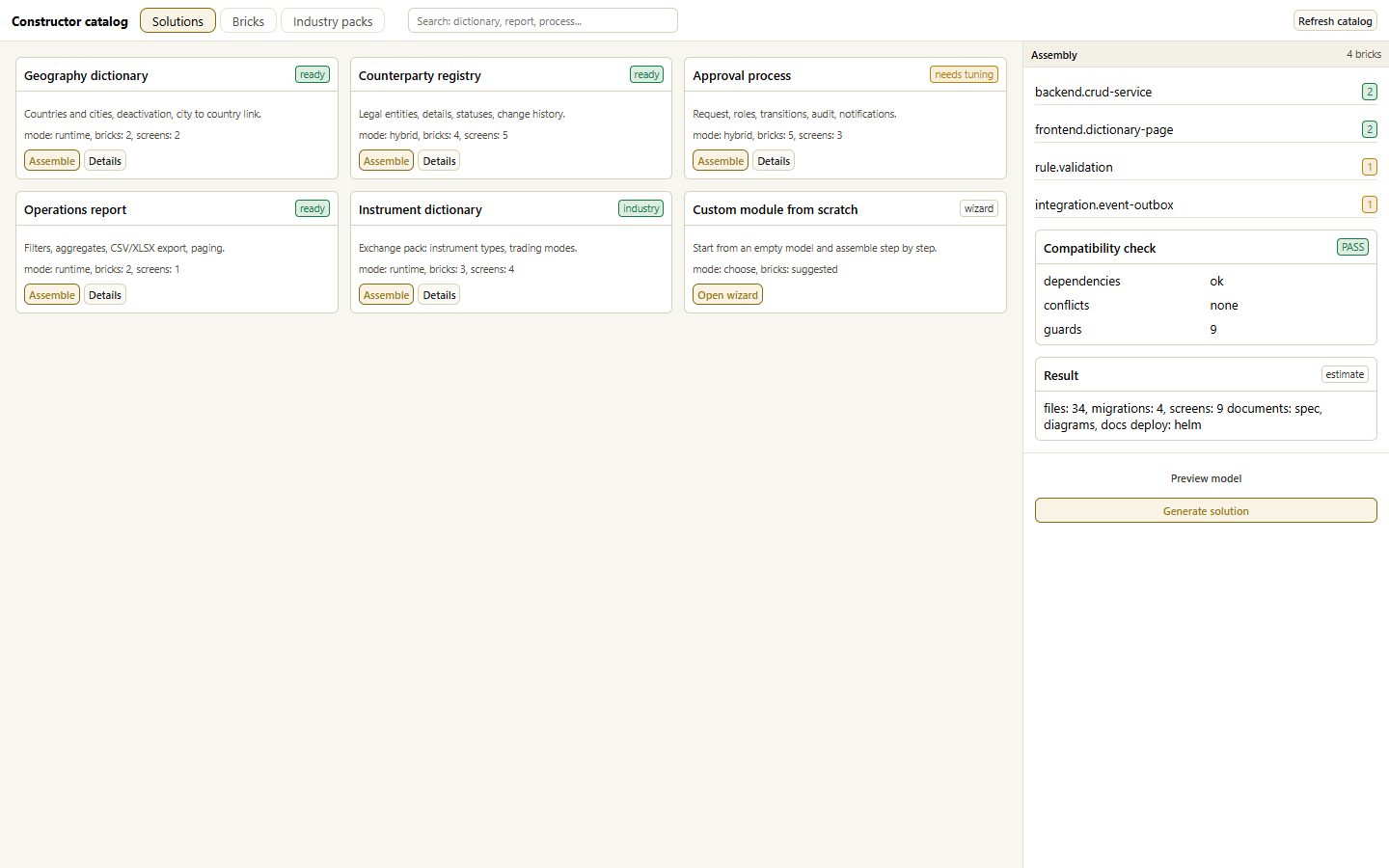
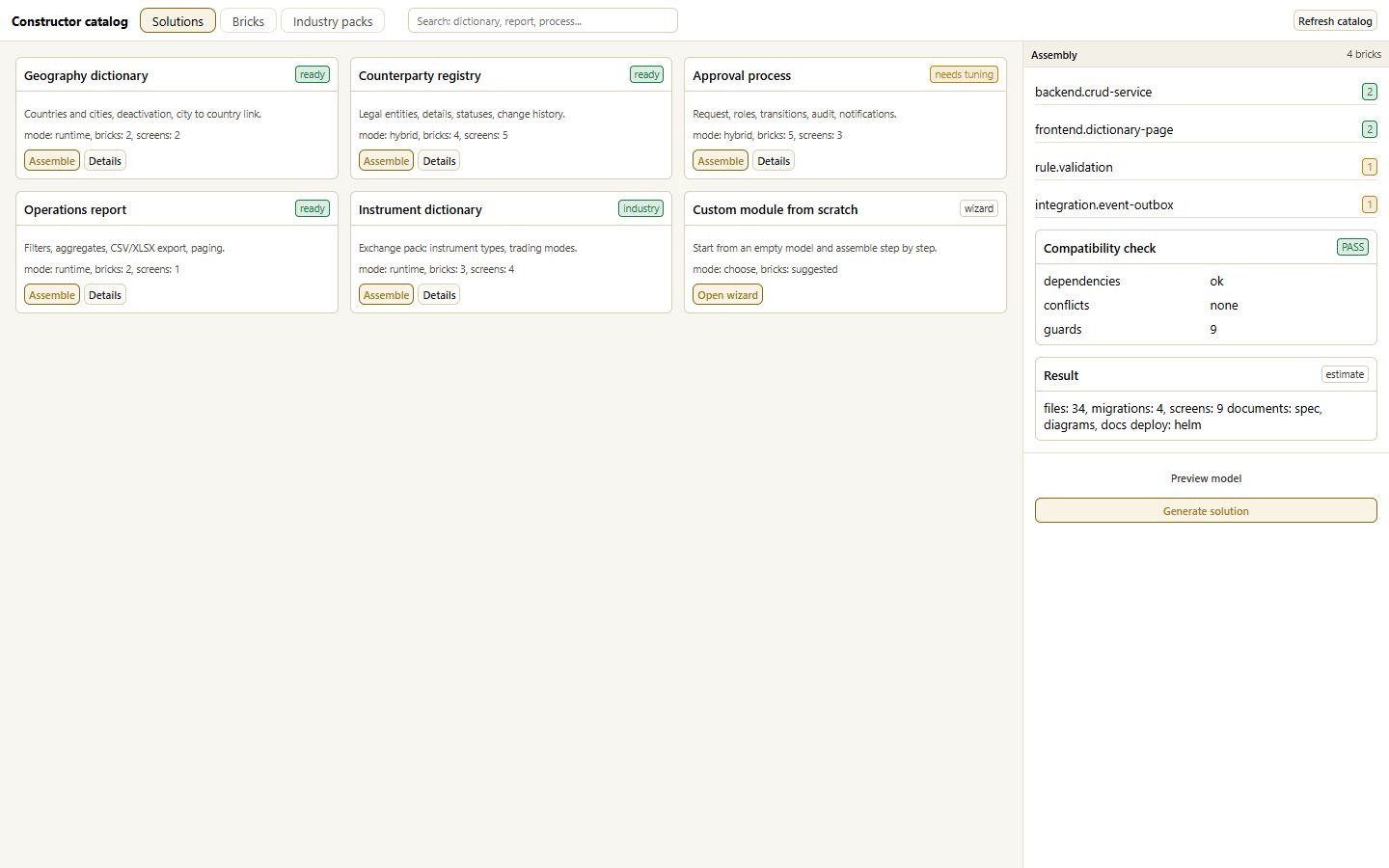
Every new screen usually starts from a blank file. The builder suggests bricks by the entities and screens of the model. With the solution teams assemble from bricks that already passed the platform guards. In setup the catalog, groups and parameter schemas are visible, and the set of bricks comes as a catalogue.
Deterministic generation
Delivery usually depends on who writes the code and when. The builder generates services, screens, tests and deployments from the model. With the solution the same model gives the same result on every run. In setup the generation markers and the diff preview are visible, so manual edits survive a re-run.
Verification layer
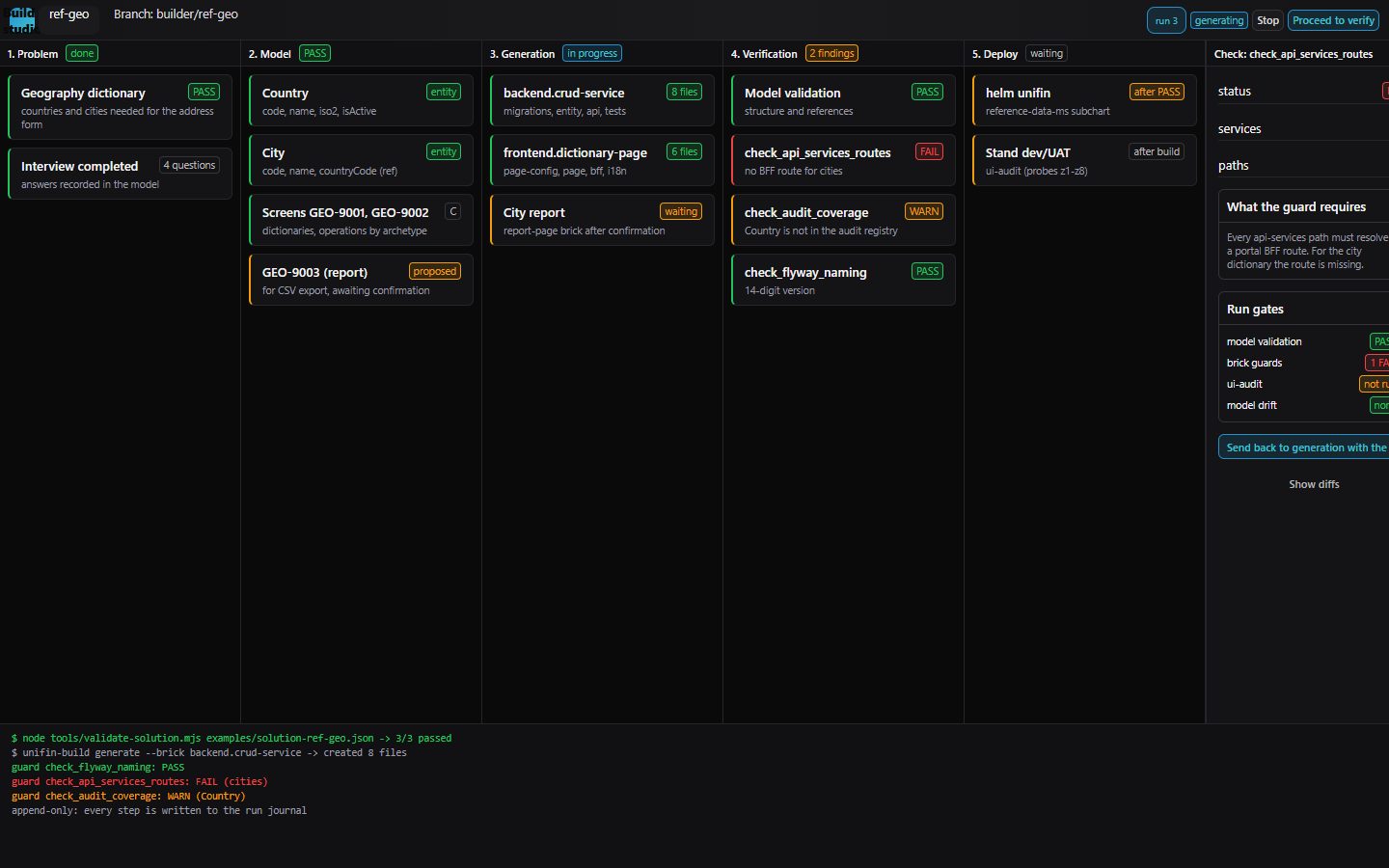
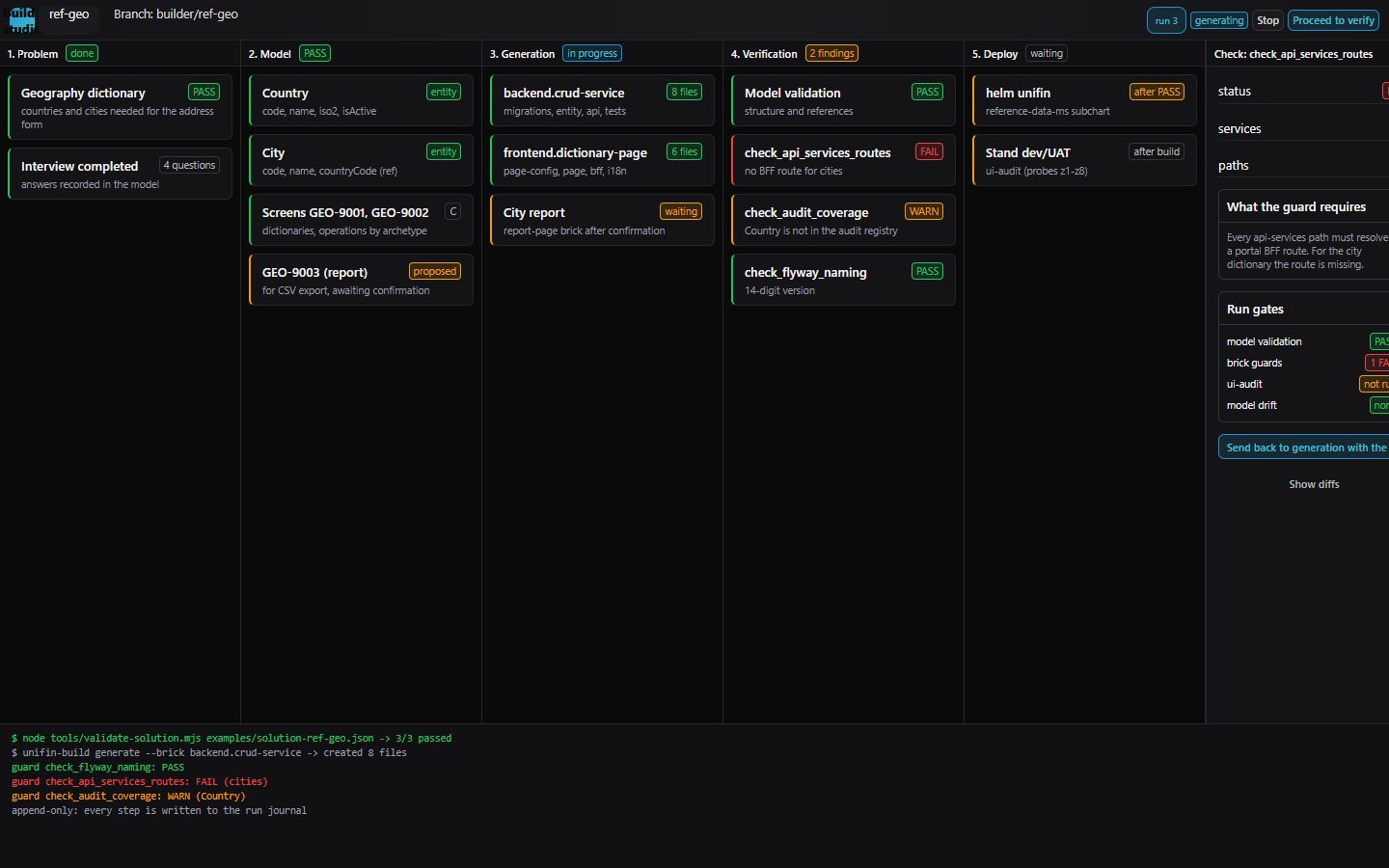
Generated code usually reaches review without proof of safety. The builder runs guards, UI audit and money invariants on what it produces. With the solution a defect stops before release, not in production. In setup the verdicts and evidence are visible, and the money path stays codegen only.
Runtime metadata
The typical part of a system usually waits for the next release. The builder keeps pages, forms and lists as versioned runtime metadata. With the solution a dictionary or a list changes without a rebuild. In setup the metadata and its versions are visible, and the change audit records who moved what.
Process and rules
A process change usually becomes a development task. The builder keeps states, transitions, actors and rules declarative. With the solution a workflow changes by configuration, under four eyes. In setup the process definition and the decision tables are visible, and the actors come from the role canon.
Open interfaces
A constructor usually locks the customer into its own tooling. The builder exposes the model by MCP, a CLI and an open JSON Schema. With the solution AI assistants, CI and partner tools work on one contract. In setup the schema, the CLI and the server are visible, and the output stays ordinary code.